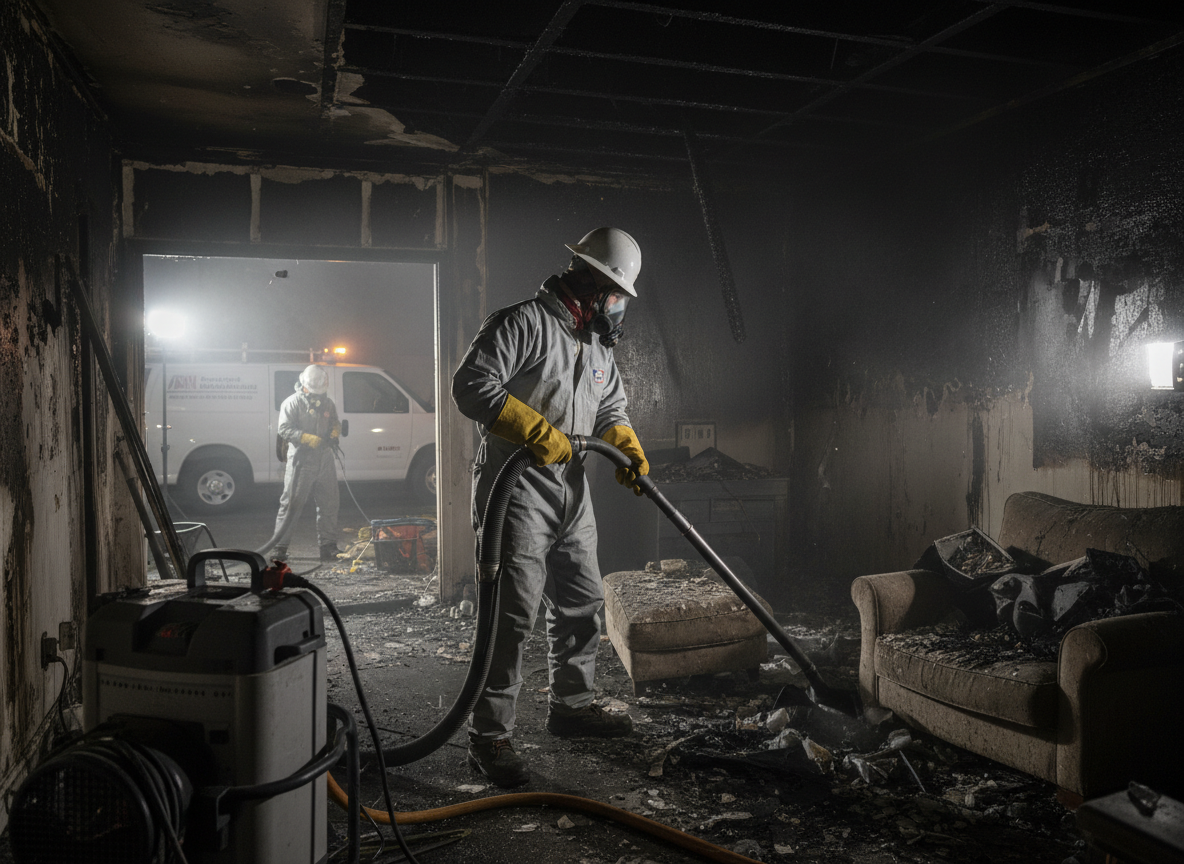
Northridge sits in a Mediterranean climate with hot, dry summers that turn even small kitchen or electrical fires into widespread smoke events. When flames are extinguished, the real work begins with rapid removal of acidic soot that settles on drywall, HVAC systems and contents inside mid-century single-family homes common throughout Northridge East and Northridge West. Delaying extraction allows soot to bond with surfaces, especially during the heat that drives particles deeper into porous materials like oak flooring and plaster walls found near Reseda Boulevard.
Suppression water left behind creates secondary mold risks in crawl spaces and attics of homes built before modern vapor barriers became standard in the San Fernando Valley. Our crews at 19350 Nordhoff Way respond within hours to contain these issues, using air movers and dehumidifiers sized for the larger square footage typical of properties surrounding California State University Northridge. We also coordinate with Los Angeles County inspectors when structural members near load-bearing walls show charring that requires engineered repair plans.
Smoke travels through shared walls and attic spaces in neighborhoods bordering Chatsworth and Granada Hills, often affecting homes that appear untouched from the street. Twenty-four-hour availability lets us board openings, perform initial corrosion testing on copper wiring and electronics, and document contents before residents return. This sequence prevents the odor rebound that occurs when summer temperatures rise again and reactivate trapped residues in ductwork.
Technician insight
In Northridge the thing that catches most people out with 24 hour fire restoration is how quickly smoke travels through the open attics of 1950s and 1960s ranch homes near the Northridge Fashion Center when the hot summer Santa Ana winds are blowing. Homeowners often think only the room with the fire needs work, but we routinely find residue in ductwork that reaches two or three houses away in Northridge West.
Kitchen fire smoke in Northridge West
A cooking fire in a single-story home near Reseda Boulevard sent smoke through the HVAC into bedrooms and the garage. We found acidic soot on copper wiring and insulation in the attic shared with the neighboring property. After 24-hour board-up, extraction of suppression water, and full duct cleaning, the family returned within five days and passed final air-quality testing.
How it works
- 1
Emergency Board-Up and Site Secure
We arrive 24/7, board openings, and prevent further weather intrusion or unauthorized entry at properties across Northridge.
- 2
Soot and Residue Assessment
Technicians test surfaces and HVAC systems for acidic soot migration common in hot, dry conditions around the CSUN Campus Area.
- 3
Water Extraction and Drying
Suppression water is removed from floors and cavities, followed by targeted drying to avoid mold in older Northridge construction.
- 4
Contents Cleaning and Odor Removal
Porous items are cleaned or inventoried for off-site treatment while thermal fogging neutralizes smoke odors in living spaces.
- 5
Reconstruction and Final Clearance
Repairs restore pre-loss condition; Los Angeles County permit requirements are met before final walkthrough with the homeowner.
Pricing
Upfront quotes are provided after on-site assessment; cost depends on square footage affected, smoke migration into HVAC, and extent of water from suppression.