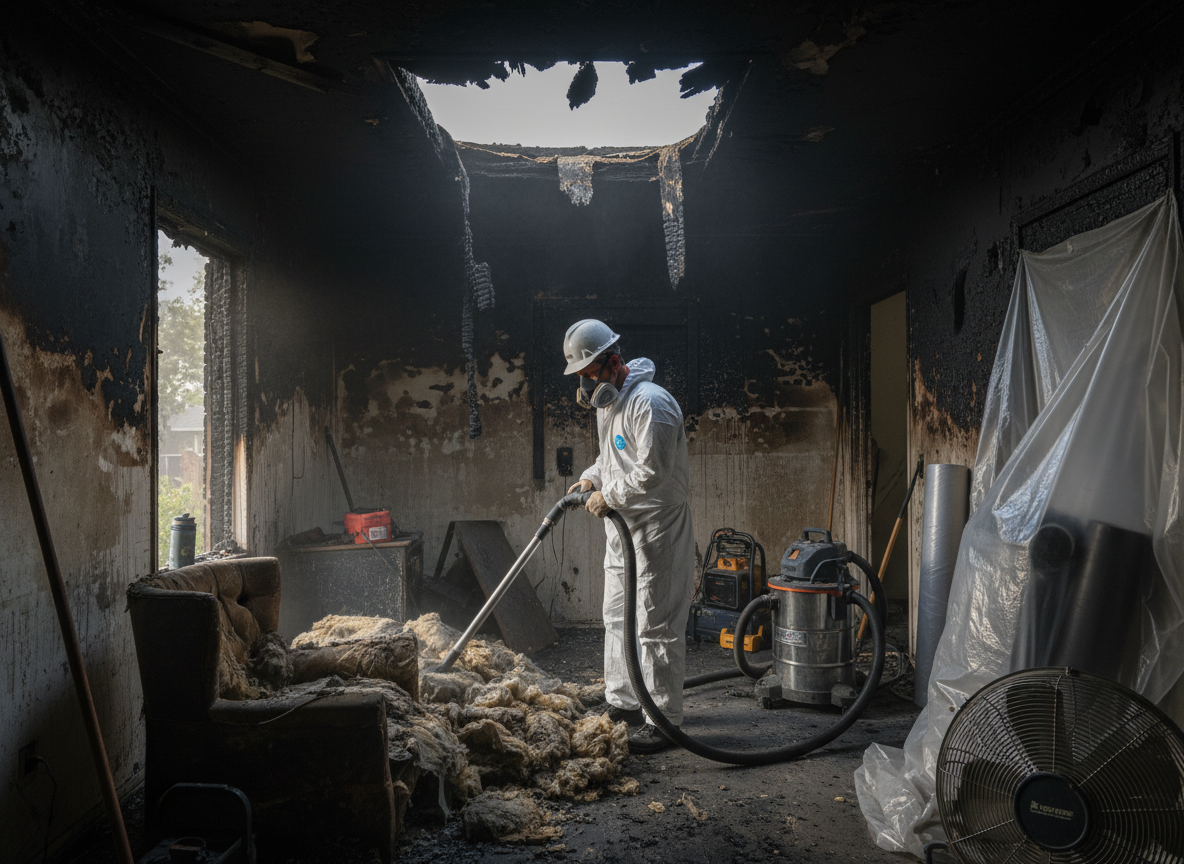
Northridge homes built from the 1960s through the 1980s often feature stucco exteriors over wood framing and lath-and-plaster interiors that trap soot and acidic smoke residue in wall cavities. After a kitchen or electrical fire, these hidden deposits continue to off-gas and corrode metal wiring and HVAC components long after the flames are out. Crews must pull baseboards and open chaseways around Reseda Boulevard properties to reach the contamination before it migrates into the CSUN Campus Area neighborhoods where newer tract homes share common attic spaces.
Los Angeles County summer heat routinely pushes attic temperatures above 130 degrees, accelerating corrosion on copper pipes and electrical boxes already coated in smoke particulates. In Northridge West, where many single-story ranch homes sit on raised foundations, smoke travels downward through floor joists into crawl spaces that stay damp year-round from the area’s occasional marine layer. Restoration teams run negative-air machines at multiple points and use corrosion inhibitors on all metal surfaces before any reconstruction begins.
Granada Hills and Porter Ranch properties frequently have tile roofs over open-beam ceilings that allow smoke to travel laterally for dozens of feet. Once the fire department leaves, owners must decide whether to gut affected rooms or attempt surface cleaning; the wrong choice leaves odors that return during the next Santa Ana wind event. Local crews document every layer removed and provide photo logs so insurance adjusters see the actual spread rather than relying on surface-level estimates.
Technician insight
In Northridge, the thing that catches most people out with Emergency fire damage restoration is how the dry Mediterranean summers and older stucco homes in Northridge West let smoke travel through hidden wall voids into the crawl space, where it sits and re-contaminates the house weeks later if the cavities are not opened.
Kitchen fire in Northridge West ranch home
A cooking fire spread through the range hood into the attic of a 1972 single-story home near California State University Northridge. We found heavy soot in the shared attic space that extended into two neighboring bedrooms. After opening the ceiling and treating all wood and metal surfaces, we ran negative air for four days and removed the odor completely before drywall replacement.
How it works
- 1
Initial Assessment
Technicians arrive within hours, document all affected rooms in Northridge East or West, and test air quality and hidden voids before any cleaning starts.
- 2
Containment and Safety
Plastic barriers and negative pressure isolate the work zone to prevent soot migration into unaffected areas of the home or neighboring units.
- 3
Soot Removal and Cleaning
HEPA vacuums, specialized sponges, and corrosion inhibitors treat surfaces, cavities, and HVAC systems common in 1970s Northridge construction.
- 4
Drying and Monitoring
Industrial dehumidifiers and air movers run until moisture levels in walls and attics return to normal for the Mediterranean climate.
- 5
Final Verification
Independent testing confirms odor and residue removal before any reconstruction or homeowner re-entry.
Pricing
Cost depends on square footage affected, number of rooms involved, and whether HVAC or structural cavities require opening; upfront written estimates provided after inspection.