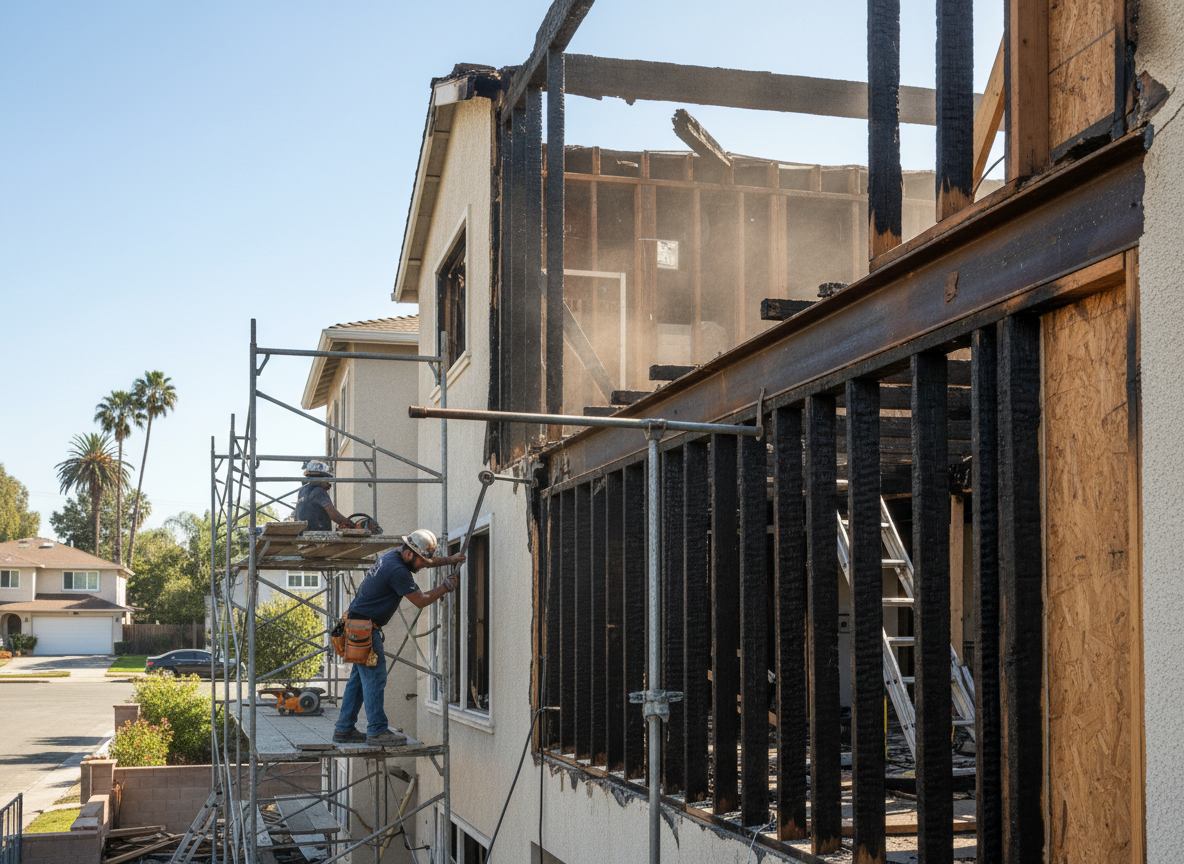
Northridge homes built before the 1994 quake often feature older lumber and plaster that char deeply during fires, especially in single-story ranch houses along Reseda Boulevard. After flames are out, crews must remove compromised joists and studs while preserving sound sections to avoid full demolition. Hot summer temperatures in the Mediterranean climate accelerate drying of remaining wood, which can hide hidden rot that only shows once walls are opened.
Los Angeles County building codes require new structural members to meet current seismic standards even on repair jobs. This means sistering new joists with hurricane ties and updating shear walls in many Northridge West properties. Crews working near California State University Northridge frequently encounter knob-and-tube wiring that must be replaced during the same opening, adding coordination with licensed electricians before drywall goes back.
Porter Ranch and Granada Hills spillover jobs show how hillside lots change the work. Soil movement after fire suppression water saturates slopes can shift foundations, so laser levels check for movement before any framing begins. Owners in Northridge East townhomes often face shared-wall issues where one unit’s repair affects the neighbor, requiring permits and temporary bracing that extend the timeline.
Inspection after initial demo reveals whether roof trusses in Chatsworth-adjacent homes need full replacement or just gusset reinforcement. The goal is always to return the structure to pre-loss condition while passing county inspection the first time.
Technician insight
In Northridge, the thing that catches most people out with structural repair after fire is how our hot summers dry out older plaster-and-lath walls near the Northridge Fashion Center so fast that hidden char in ceiling joists looks solid until you start cutting. Homeowners try to patch early and end up redoing the whole ceiling once county inspection fails.
Northridge West Ranch Home
A kitchen fire spread into the attic of a 1960s ranch in Northridge West. We found several charred ceiling joists that had lost section but the ridge beam remained intact. After shoring and replacing only the damaged joists plus adding new hurricane ties, the structure passed inspection and the owner moved back in without full roof replacement.
How it works
- 1
Initial Assessment
Technicians examine load-bearing walls, floors, and roof members in the affected Northridge property to map all fire and smoke damage.
- 2
Permit and Engineering Review
Drawings are prepared and submitted to Los Angeles County for any structural changes required by current seismic codes.
- 3
Selective Demolition and Shoring
Damaged lumber is removed and temporary supports installed to keep the building stable during repair.
- 4
Structural Replacement
New framing, joists, and connectors are installed to restore strength while meeting updated code requirements.
- 5
Final Inspection and Handover
County inspector signs off and the structure is released for finishing work by other trades.
Pricing
Upfront quotes provided after on-site inspection; final cost depends on extent of hidden damage and county permit requirements.