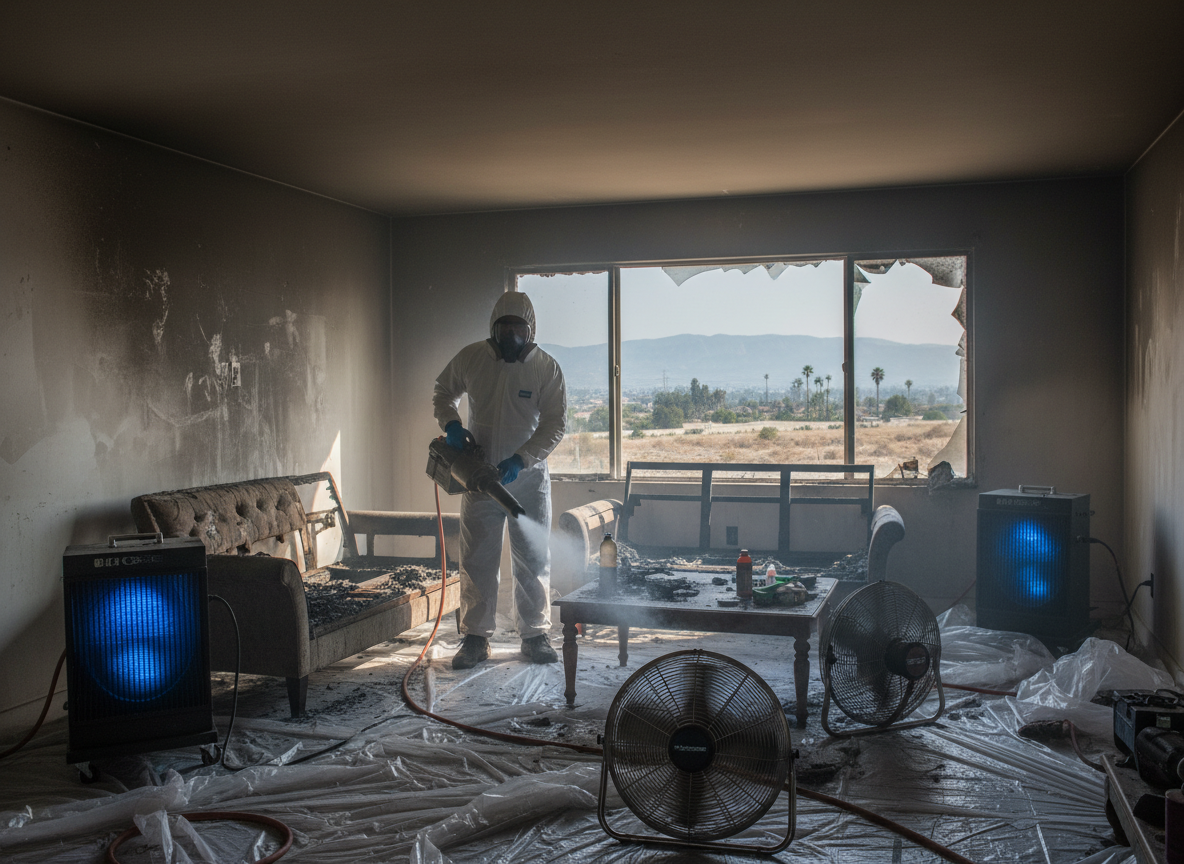
Smoke odors linger in Northridge homes built before the 1980s, especially in Northridge West and around Reseda Boulevard where drywall, insulation, and hardwood trap residues. The Mediterranean climate brings hot summers that expand and push soot deeper into wall cavities and attics. Crews from our Nordhoff Way base address these conditions daily across Los Angeles County neighborhoods, using thermal fogging and hydroxyl generators sized for single-family homes rather than commercial spaces.
In the CSUN Campus Area, multi-unit buildings often share HVAC systems that spread odors between units, requiring isolation of ductwork before treatment begins. Edge cases include properties near Northridge Fashion Center where commercial fire residues mix with household materials, demanding separate protocols for porous versus non-porous surfaces. We avoid masking agents that fail once summer heat returns and instead focus on source removal followed by air scrubbing calibrated to local humidity swings.
Los Angeles County fire codes require documentation of odor migration paths before final clearance, particularly when smoke travels through shared walls in Northridge East tracts. Homeowners sometimes overlook subfloor layers or attic insulation that retain odors long after visible cleanup. Our process includes targeted removal of affected materials and post-treatment air sampling to confirm levels drop below detectable thresholds before reoccupancy.
Technician insight
In Northridge, the thing that catches most people out with Odor removal after fire is how hot summer temperatures drive smoke into the original insulation of 1960s and 1970s homes along Reseda Boulevard, making attic work essential even when main floors seem clear.
Northridge East Smoke Odor
A fire in an attached garage sent smoke through shared walls of a Northridge East home. We found heavy residue in attic insulation and HVAC returns that standard cleaning missed. Targeted removal and neutralization cleared the odors without full HVAC replacement.
How it works
- 1
Initial Assessment
Inspect all affected rooms, HVAC, and attic spaces in the Northridge property to map smoke migration.
- 2
Containment Setup
Seal rooms and isolate ductwork to prevent cross-contamination between areas like Northridge West and nearby Granada Hills.
- 3
Deep Cleaning
Remove residues from walls, ceilings, and porous materials using specialized agents suited to older local construction.
- 4
Odor Neutralization
Apply ozone or hydroxyl treatment calibrated for summer heat conditions common in Porter Ranch and Chatsworth.
- 5
Verification and Clearance
Conduct air sampling and walkthrough to confirm odors are eliminated before returning the home to use.
Pricing
Pricing varies by square footage affected, depth of smoke in older Northridge homes, and whether HVAC cleaning is required; upfront quotes provided after assessment.