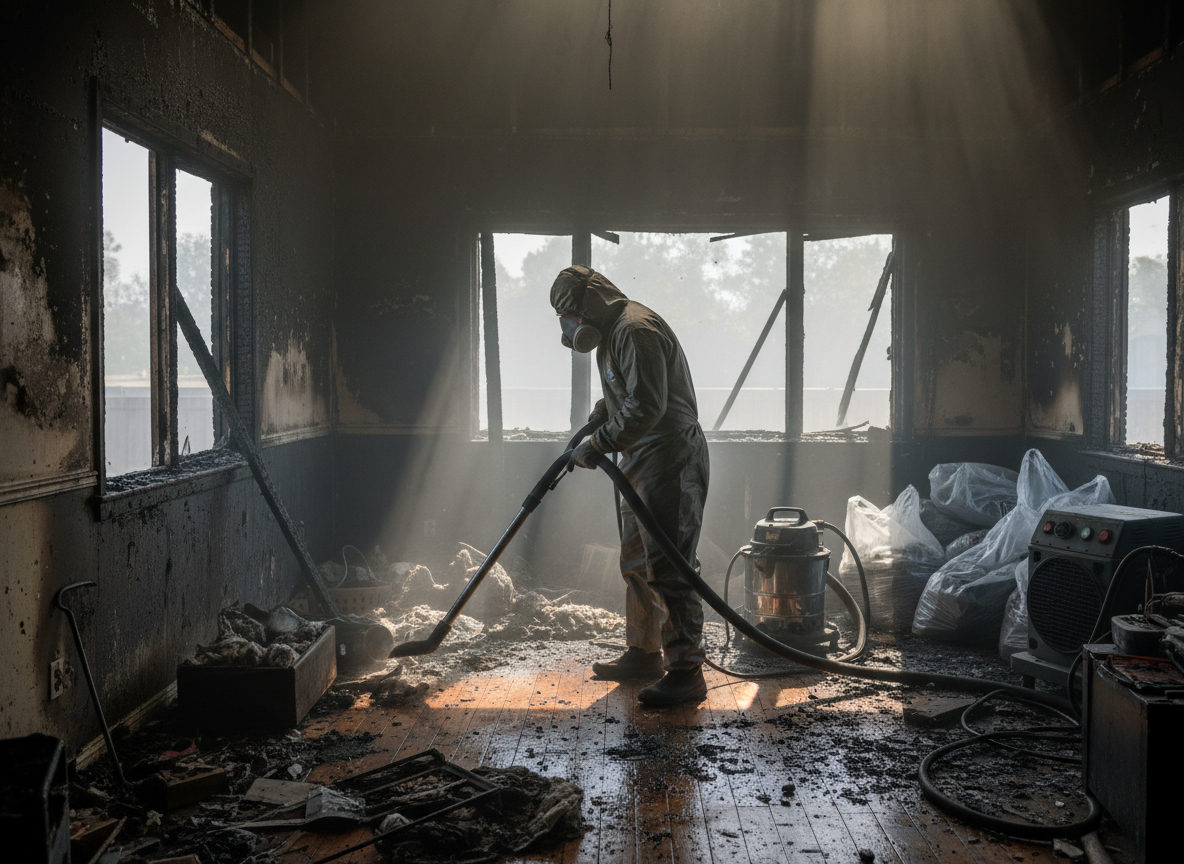
Northridge homes built before and after the 1994 earthquake often feature older drywall, textured ceilings and HVAC systems with long duct runs that trap soot deep inside walls and attics. In the Mediterranean climate with hot summers, residual smoke particles bake onto surfaces faster, making removal more difficult if not addressed within the first 48 hours. Crews working in Northridge East and near Reseda Boulevard routinely open wall cavities and clean behind baseboards where smoke travels through shared walls in townhomes and apartment complexes.
Properties around California State University Northridge and the Northridge Fashion Center site frequently have stucco exteriors and flat roofs that hold ash after nearby brush fires or structure fires in Chatsworth and Granada Hills. Soot from these events is alkaline and corrodes metal fixtures and electrical boxes if left untreated. Restoration teams use HEPA filtration and negative air machines sized for the square footage typical in Porter Ranch ranch-style houses to keep airborne particles from spreading during cleaning.
Los Angeles County fire codes require proper disposal of contaminated materials, and crews document every step when insurance adjusters request proof of soot migration into insulation or under flooring. Hot summer winds common in the San Fernando Valley push smoke farther into homes through attic vents, so clean up includes sealing and cleaning those pathways before any reconstruction begins.
Technician insight
In Northridge, the thing that catches most people out with fire damage clean up is how quickly summer heat sets soot into the popcorn ceilings and textured walls common in homes built in the 1970s and 1980s near Reseda Boulevard. Homeowners try wiping surfaces themselves and push the alkaline residue deeper into the drywall, forcing us to remove more material later.
Northridge East townhome after kitchen fire
Smoke traveled through shared attic space into three neighboring units near the CSUN Campus Area. We found heavy soot inside HVAC returns and behind baseboards that standard wipe-downs had missed. Containment and full duct cleaning plus wall cavity vacuuming restored air quality without tearing out entire ceilings.
How it works
- 1
Initial Assessment
Technicians inspect all affected rooms, attics and HVAC systems to map smoke travel paths in Northridge homes.
- 2
Containment Setup
Plastic barriers and negative air machines isolate work zones to prevent cross-contamination between Northridge West and East sections.
- 3
Soot and Ash Removal
HEPA vacuums, sponges and specialized cleaners remove residue from walls, ceilings, ducts and contents without spreading particles.
- 4
Odor Neutralization
Ozone or hydroxyl generators treat remaining smoke odors trapped in porous materials common in older local housing stock.
- 5
Final Clearance
Air quality testing and visual inspection confirm surfaces are clean before returning the property to the owner.
Pricing
Cost depends on square footage affected, depth of smoke penetration into walls and ducts, and whether contents require off-site cleaning.