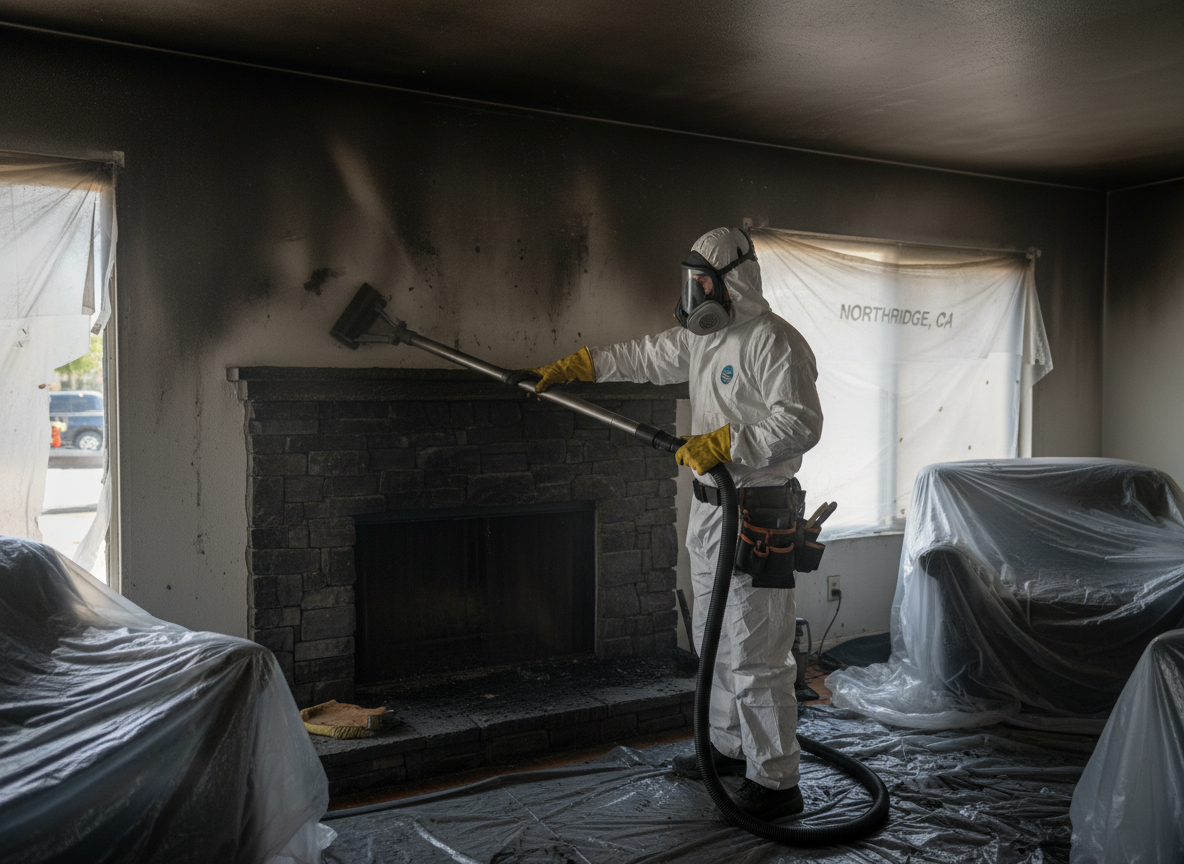
Soot from structure fires in Northridge often penetrates porous materials like drywall and older stucco homes common along Reseda Boulevard and in Northridge East. Hot summer temperatures in the local Mediterranean climate cause particles to bond deeper into surfaces, requiring HEPA vacuuming followed by chemical sponges and degreasers rather than simple wiping. Technicians must seal off HVAC systems early to prevent circulation through homes near California State University Northridge, where ductwork in 1960s-era housing frequently carries residue into living spaces.
Edge cases arise in multi-story properties around the Northridge Fashion Center, where soot travels upward through stairwells and settles on upper-level ceilings. Los Angeles County building codes require documentation of containment methods before any reconstruction begins, and crews document every step to avoid disputes with insurers. Water-based cleaning is avoided on electronics or fabric because residual moisture combined with summer heat can create secondary mold issues in Granada Hills and Porter Ranch homes that share similar construction.
Specialized equipment such as air scrubbers with activated carbon filters is essential when working near Chatsworth boundaries, where wind patterns can reintroduce outdoor contaminants during open-window drying periods. Technicians test pH levels on walls before final sealing because alkaline soot from synthetic materials reacts differently than acidic soot from wood fires. This approach prevents discoloration that appears weeks later in Northridge West neighborhoods with older single-family homes.
Technician insight
In Northridge, the thing that catches most people out with Soot removal is how the hot summer temperatures bake particles into the textured ceilings common in homes built near Reseda Boulevard and the CSUN campus, so standard wiping just smears it deeper and forces a second pass with different tools.
Kitchen Fire Residue Spread
A fire in a Northridge West kitchen sent soot through the central air system into adjacent bedrooms. Inspection revealed heavy deposits inside ductwork and on popcorn ceilings typical of the 1970s housing stock. Targeted dry cleaning and register sealing restored the interior. Air tests confirmed safe levels before the family returned.
How it works
- 1
Containment Setup
Isolate affected rooms with plastic sheeting and negative air machines to stop soot migration into clean areas of the property.
- 2
Surface Assessment
Inspect all materials including walls, ceilings, and HVAC components in Northridge homes to determine penetration depth and required methods.
- 3
Dry Cleaning Phase
Apply HEPA vacuums and chemical sponges to lift loose and embedded particles without introducing moisture.
- 4
Final Verification
Run air quality tests and wipe inspections across treated surfaces before releasing the space back to the owner.
Pricing
Pricing varies based on square footage affected, soot type, and whether HVAC systems require cleaning.