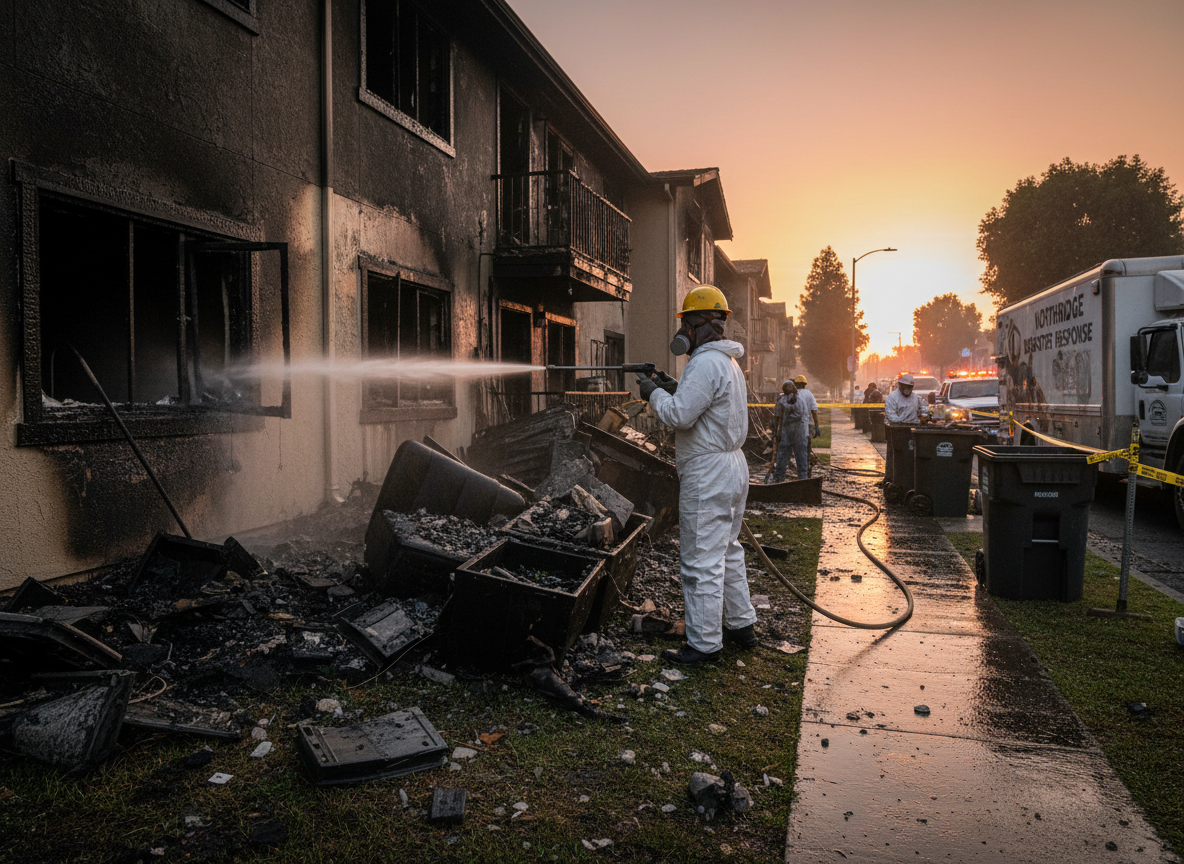
Northridge apartments, especially those built in the 1960s and 1970s near California State University Northridge and along Reseda Boulevard, often feature shared HVAC systems and older drywall that allow smoke to travel between units. Hot Mediterranean summers accelerate soot adhesion to surfaces and complicate odor removal because residents keep windows open. Crews must isolate affected units quickly to prevent cross-contamination into Northridge West or CSUN Campus Area buildings while complying with Los Angeles County air-quality rules during cleanup.
Water used to extinguish fires can pool in slab-on-grade foundations common in Northridge East complexes, leading to hidden mold growth beneath flooring when combined with summer heat. Technicians test for pH levels in charred materials and use negative-air machines to capture fine particles before they settle into neighboring units in Granada Hills or Porter Ranch. Failure to address these pockets results in recurring odors months later when temperatures spike.
Cleanup crews also contend with dense landscaping around many Northridge apartment complexes that traps smoke against exterior walls, requiring specialized rinsing of stucco and window frames. In buildings near the Northridge Fashion Center, parking structures add another layer because smoke can linger in concrete and affect vehicles. Every job includes documenting tenant belongings for insurance adjusters and coordinating with property managers to schedule work around occupied units without displacing residents longer than necessary.
Technician insight
In Northridge, the thing that catches most people out with Apartment fire cleanup is how fast smoke moves through the older shared ventilation shafts in buildings around California State University Northridge during hot summer days when everyone runs their AC units nonstop.
Kitchen fire smoke spread in Northridge East complex
A grease fire in a second-floor unit sent smoke through the HVAC into three neighboring apartments. Crews found soot inside wall cavities and settled on carpet fibers near Reseda Boulevard. Negative-air machines and targeted cleaning removed residue from all four units without displacing tenants beyond one night.
How it works
- 1
Initial Assessment
Technicians inspect all affected units and shared systems to map smoke paths through vents and walls.
- 2
Containment and Air Scrubbing
Plastic barriers and negative-air machines isolate the space while capturing airborne particles before they reach adjacent apartments.
- 3
Soot and Residue Removal
Specialized sponges and HEPA vacuums clean walls, ceilings, and contents without spreading residue into neighboring units.
- 4
Odor Neutralization and Final Clearance
Thermal fogging and ozone treatments address embedded smells, followed by air-quality testing before reoccupancy.
Pricing
Pricing depends on number of affected units, smoke migration distance, and contents volume; on-site assessment required.