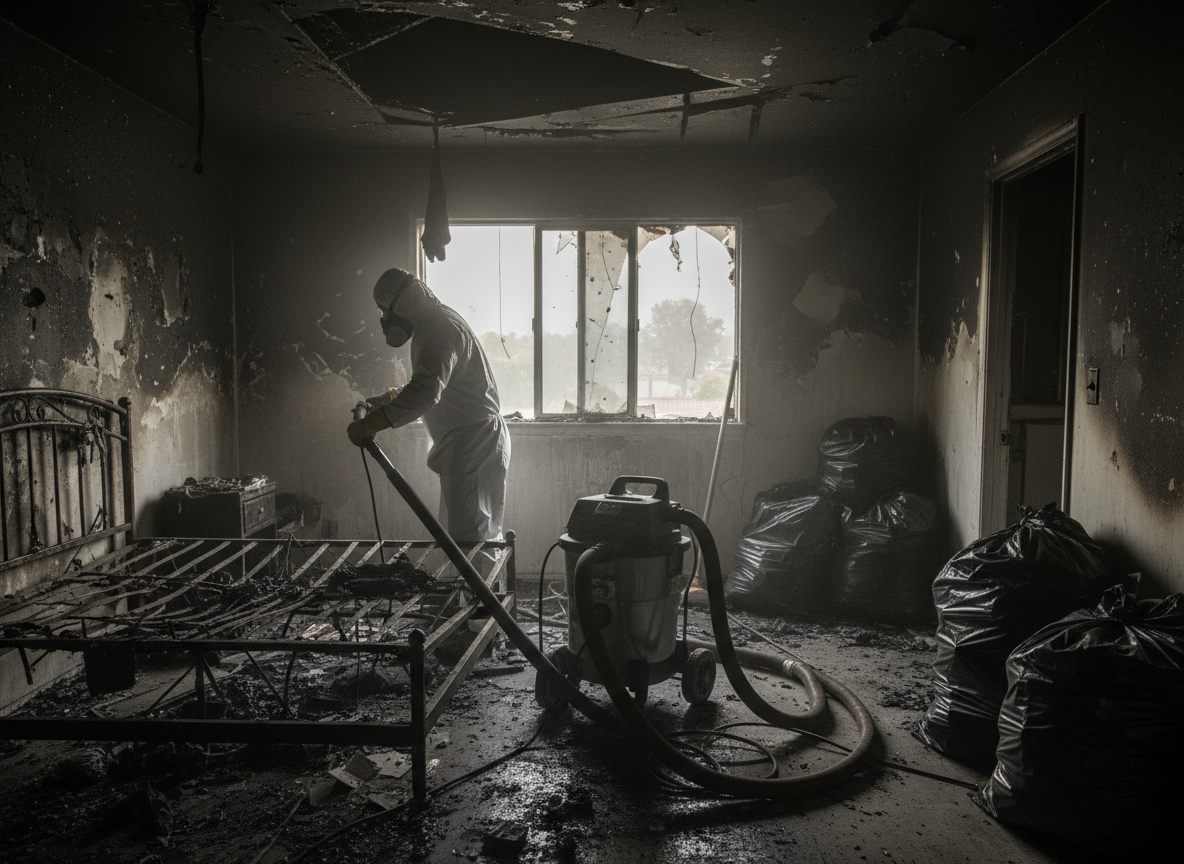
Bedroom fire damage cleanup in Northridge often involves older single-family homes in Northridge East and Northridge West where lath-and-plaster walls and popcorn ceilings trap soot deeper than newer drywall. Hot summer temperatures accelerate smoke penetration into fabrics, mattresses and carpet padding, requiring separate handling of porous materials that cannot be salvaged. Crews must account for the Mediterranean climate that leaves residual humidity in wall cavities even after the fire is out, increasing the risk of hidden mold if drying is rushed.
Work near California State University Northridge and the Northridge Fashion Center frequently includes multi-story homes where smoke travels upward through HVAC returns, coating bedroom furniture and electronics. Technicians test pH levels on walls before applying cleaners because alkaline soot from common household fires reacts differently on painted surfaces common in 1970s and 1980s builds. Containment barriers are essential to keep particles from drifting into unaffected rooms during removal.
In Los Angeles County neighborhoods bordering Chatsworth and Granada Hills, bedroom cleanup jobs regularly encounter built-in closets and wood flooring that hold odor after visible soot is removed. Negative air machines and odor-neutralizing agents are run for extended periods because summer heat can reactivate smells weeks later if not fully treated. Homeowners are advised to remove clothing and linens before crews arrive to prevent cross-contamination during the process.
Technician insight
In Northridge, the thing that catches most people out with Bedroom fire damage cleanup is how the hot summers dry out the older plaster in Northridge East homes so fast that soot bonds into the surface before homeowners notice, forcing extra passes with alkaline cleaners that newer drywall never needs.
Smoke Migration in Northridge West Bedroom
A contained kitchen fire sent smoke through shared ductwork into a second-floor bedroom in a 1978 home near Reseda Boulevard. Inspection revealed soot inside the closet and under the carpet pad. Crews isolated the room, removed affected textiles, cleaned all surfaces, and ran odor treatment for three days until readings cleared.
How it works
- 1
Initial Assessment
Technicians inspect the bedroom for visible soot, hidden smoke in cavities, and affected materials while documenting conditions for insurance.
- 2
Containment and Ventilation
Plastic barriers isolate the bedroom and negative air machines pull particles away from the rest of the Northridge home.
- 3
Soot and Residue Removal
Specialized cleaners treat walls, ceilings, and hard surfaces; unsalvageable items like carpet and mattresses are removed.
- 4
Odor Neutralization and Drying
Thermal fogging and air scrubbers eliminate lingering smoke smell while dehumidifiers address summer moisture in wall cavities.
Pricing
Upfront quotes provided after on-site inspection of soot depth and affected materials.