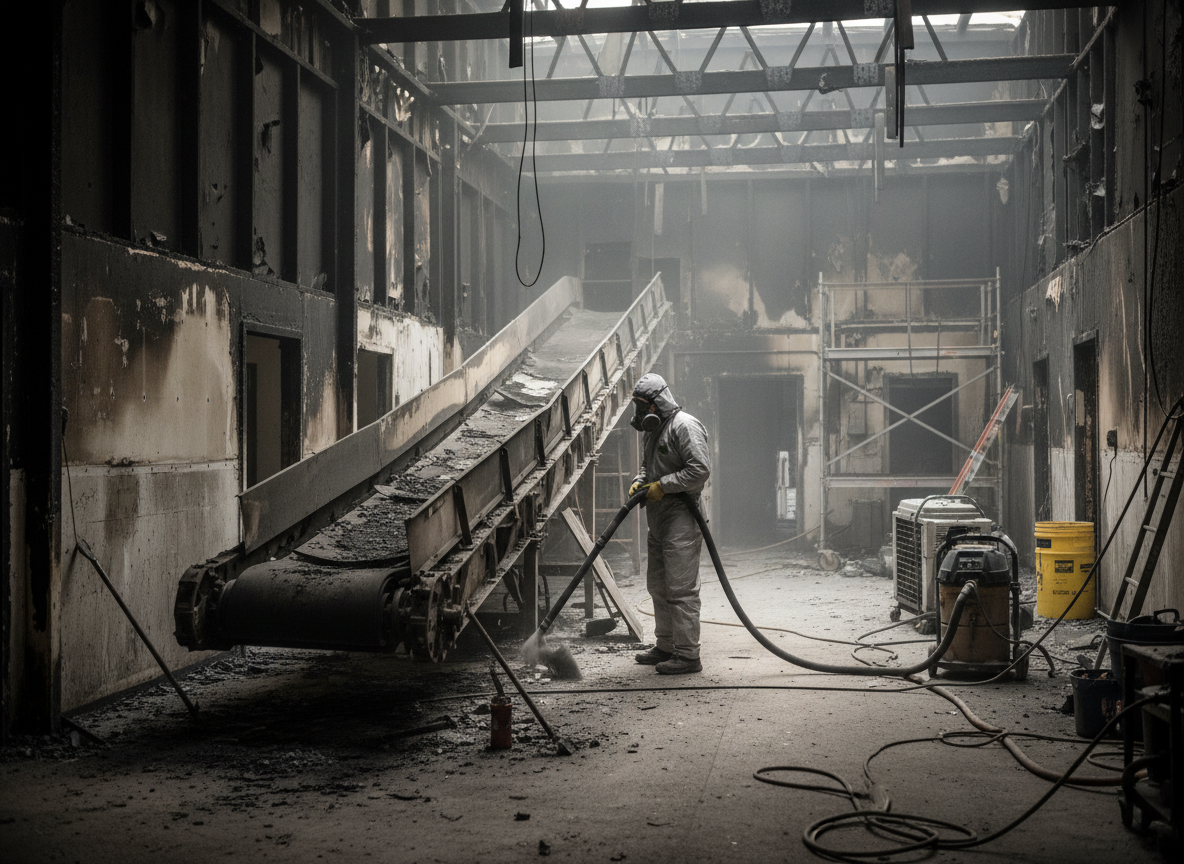
Commercial properties along Reseda Boulevard and near the Northridge Fashion Center often feature mixed-age construction with older HVAC systems that trap smoke and soot deep in ductwork. In Northridge’s Mediterranean climate, hot summer days accelerate chemical reactions in residue, turning acidic soot corrosive on metal fixtures and electronics within hours. Restoration crews must isolate these systems early to prevent secondary damage to inventory and tenant spaces in buildings around the CSUN Campus Area.
Los Angeles County fire codes require documentation of all structural repairs and air quality testing before re-occupancy, especially for multi-tenant retail and office spaces common in Northridge East and Northridge West. Crews frequently encounter hidden voids above drop ceilings and behind masonry where embers linger, demanding targeted demolition rather than blanket removal. Work in nearby Porter Ranch and Granada Hills commercial strips shows similar patterns where hillside winds can push smoke further into adjacent units.
Restoration timelines shift when summer heat increases humidity swings, forcing slower drying of porous materials like acoustic tile and carpet backing to avoid mold. Technicians coordinate with Los Angeles County inspectors on electrical re-wiring and sprinkler resets before final clearance. Properties near Chatsworth borders often need extra containment because shared walls allow odor migration between suites.
Seasonal Considerations
Hot summer temperatures in Northridge speed soot adhesion to surfaces, requiring pH-neutral cleaners applied in stages rather than aggressive solvents that can etch finishes common in 1980s-era commercial builds.
Technician insight
In Northridge, the thing that catches most people out with Commercial fire restoration is how our hot summer Mediterranean climate drives acidic soot deeper into older HVAC runs around the CSUN Campus Area before crews arrive, forcing extra duct replacement that owners never budget for.
Retail Suite Smoke Migration
A fire started in an adjacent unit on Reseda Boulevard sent smoke through shared ductwork into a Northridge clothing store. Inspection revealed heavy residue in ceiling voids and along north-facing walls. Crews isolated the HVAC, performed staged cleaning, and rebuilt the affected ceiling to county standards. The store reopened within eleven days with full air clearance.
How it works
- 1
Initial Assessment
Technicians inspect the commercial structure for fire, smoke, and water damage extent while documenting conditions for Los Angeles County compliance.
- 2
Containment and Safety
Crew sets up negative air and physical barriers to protect unaffected areas around Northridge commercial corridors.
- 3
Soot and Residue Removal
Specialized equipment extracts acidic soot from HVAC, walls, and inventory before corrosion sets in during hot weather.
- 4
Structural Repairs and Restoration
Damaged sections are rebuilt to current codes, followed by odor neutralization and final air quality verification.
- 5
Final Clearance
County inspection support and walkthrough confirm the space meets re-occupancy standards.
Pricing
Costs depend on square footage affected, smoke migration depth, and seasonal drying demands; upfront quotes provided after on-site evaluation.