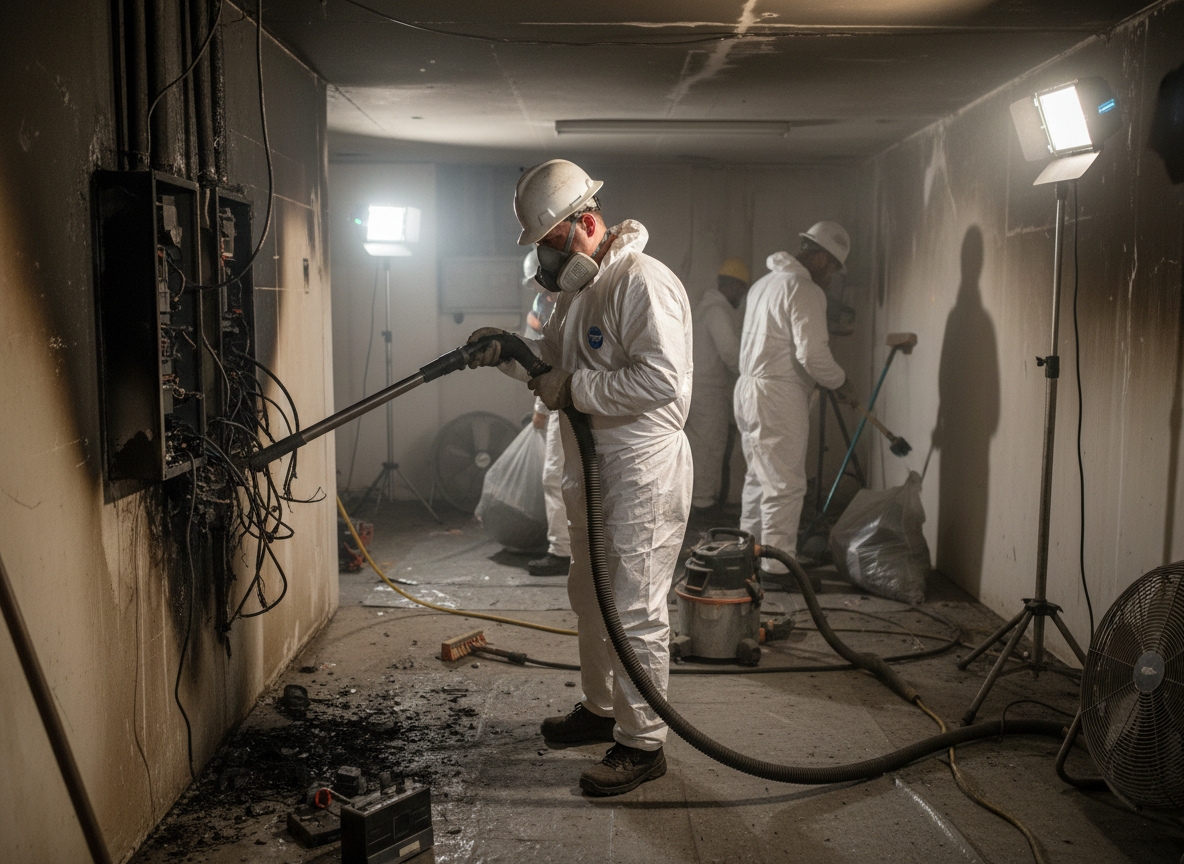
Electrical fires in Northridge often start in older single-family homes built in the 1950s and 1960s where aluminum wiring or outdated panels meet the demands of modern air conditioning units. Hot summer temperatures push circuits harder, melting insulation and leaving fine conductive soot that travels through HVAC systems into attics and wall cavities common in Northridge West and Northridge East neighborhoods. Cleanup requires isolating affected circuits before HEPA vacuuming and chemical neutralization to prevent corrosion on copper and aluminum conductors still in use around California State University Northridge housing stock.
Soot from electrical fires bonds differently than smoke from wood or fabric, requiring pH-neutral cleaners on drywall and insulation rather than standard degreasers that can leave residues. In Los Angeles County homes near Reseda Boulevard, we frequently find hidden damage behind stucco exteriors where moisture from suppression efforts combines with soot to create ongoing corrosion on junction boxes. Technicians must document every removed section of wiring for insurance adjusters while preserving the original panel schedules that many Northridge properties still retain.
Edge cases include fires that originate in detached garages common in Granada Hills and Porter Ranch, where stored vehicles add fuel and complicate ventilation. Mediterranean climate humidity spikes after summer storms can reactivate acidic residues on metal surfaces days after the initial event, requiring follow-up neutralization visits that standard protocols miss.
Technician insight
In Northridge the thing that catches most people out with electrical fire cleanup is the aluminum wiring common in 1960s tract homes around Northridge East. Once soot gets into those connections it creates ongoing resistance that shows up weeks later as new hot spots, and the Mediterranean heat makes it worse because panels already run warm.
Northridge West Garage Panel Fire
A 1962 ranch home near Northridge Fashion Center lost power after an overloaded subpanel in the garage ignited. We isolated the remaining circuits, removed soot-coated aluminum wiring from two walls, neutralized the drywall, and cleared the HVAC before handing the panel replacement to the electrician.
How it works
- 1
Safety and Power Isolation
Shut down affected circuits at the main panel and verify zero energy with a non-contact tester before entering the structure.
- 2
Soot Mapping and Containment
Document soot migration paths through HVAC ducts and wall cavities using inspection cameras, then seal rooms to prevent cross-contamination.
- 3
Selective Demolition and Removal
Remove charred wiring, insulation, and drywall sections while preserving undamaged conductors for later inspection by licensed electricians.
- 4
Neutralization and Cleaning
Apply pH-balanced solutions to all surfaces, followed by HEPA vacuuming and air scrubbing to remove conductive particles.
- 5
Verification and Handover
Test remaining circuits for insulation integrity and provide a written scope for the electrician who will perform permanent repairs.
Pricing
Cost depends on square footage affected, number of circuits involved, and whether HVAC duct cleaning is required; upfront quotes provided after on-site assessment.