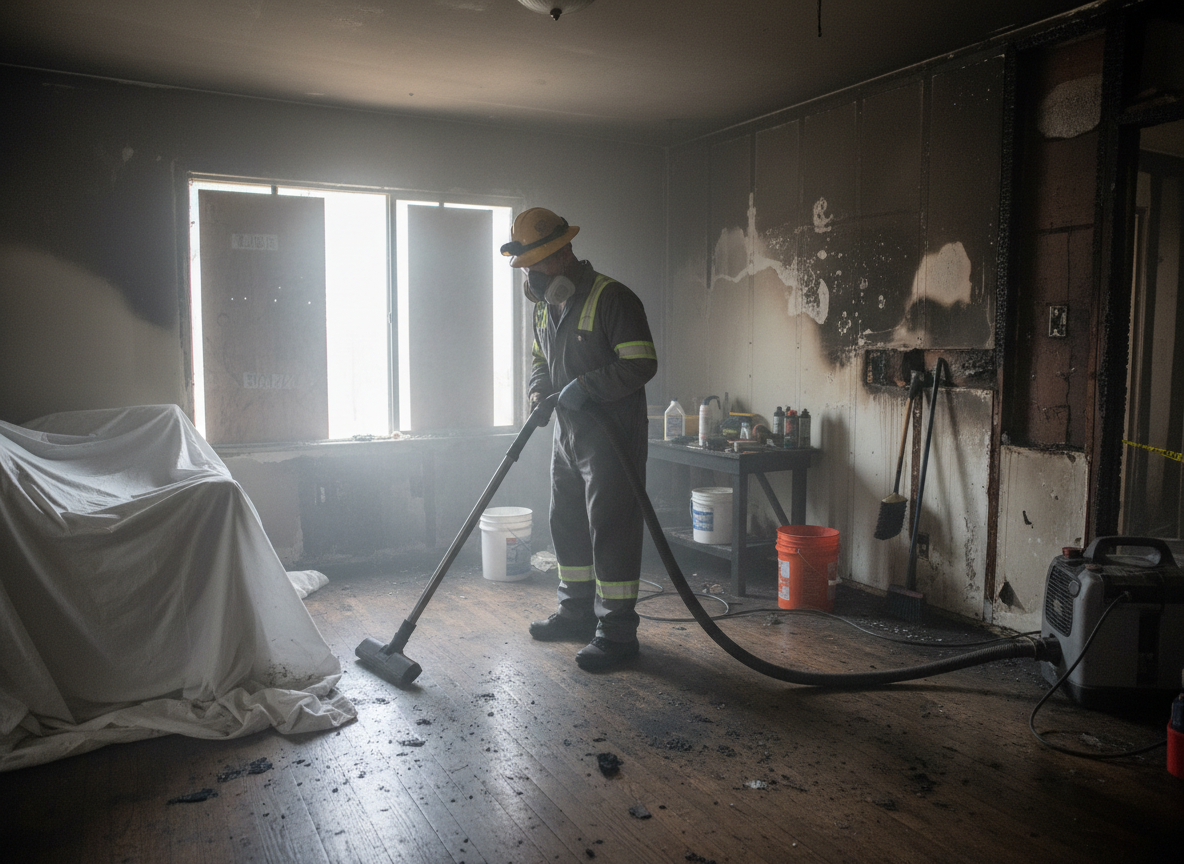
Northridge homes built in the 1960s and 1970s often feature stucco exteriors over wood framing and popcorn ceilings that trap smoke particulates during fires. Hot Mediterranean summers dry these materials quickly, allowing odors to embed deeper into insulation and ductwork around California State University Northridge and along Reseda Boulevard. Restoration crews must remove affected drywall sections rather than surface clean to prevent recurring smells in the dry heat.
Fires in Northridge West and Northridge East frequently involve kitchen appliances or electrical panels in older single-family homes. Smoke travels through shared walls in multi-unit buildings near the Northridge Fashion Center, requiring negative air machines and HEPA filtration to protect unaffected units. Crews test for hidden moisture from suppression water because summer temperatures accelerate mold growth once humidity returns.
Los Angeles County building codes require permits for structural repairs after fire events, especially when load-bearing walls are involved. Restoration teams coordinate with local inspectors while documenting soot migration patterns that differ from newer builds in Porter Ranch. This documentation protects homeowners when insurance adjusters question the extent of contamination in older neighborhoods.
Portable generators and fuel-powered equipment used during outages can create secondary smoke issues inside garages attached to homes in Granada Hills. Technicians isolate these areas early and monitor carbon monoxide levels before reoccupancy, a step made more critical by the region's frequent Santa Ana wind events that push smoke further into structures.
Technician insight
In Northridge, the thing that catches most people out with fire and smoke damage restoration is how the hot summers dry out the 1960s-era stucco and wood-frame homes in Northridge East, letting smoke travel through tiny cracks in popcorn ceilings that newer builds don't have.
Kitchen fire smoke in Northridge West duplex
A cooking fire sent heavy smoke through a shared wall into the neighboring unit near Reseda Boulevard. We found soot inside the HVAC ducts and behind baseboards that standard cleaning missed. After removing affected drywall and running negative air for three days, both units passed air testing and were cleared for occupancy.
How it works
- 1
Emergency Assessment
Technicians arrive within hours to document fire patterns, test air quality, and identify hidden smoke paths through attics and HVAC systems in Northridge homes.
- 2
Containment and Removal
Affected materials are removed using containment barriers to prevent cross-contamination, focusing on porous surfaces common in 1970s construction around CSUN.
- 3
Cleaning and Deodorization
Specialized equipment cleans hard surfaces and neutralizes odors embedded in drywall and insulation, followed by thermal fogging suited to dry summer conditions.
- 4
Rebuild and Final Clearance
Repairs restore the structure to pre-loss condition with final air quality testing before returning keys to residents in Northridge East or West.
Pricing
Upfront written quotes after on-site inspection; costs vary by fire size, materials affected, and access challenges in older Northridge housing.