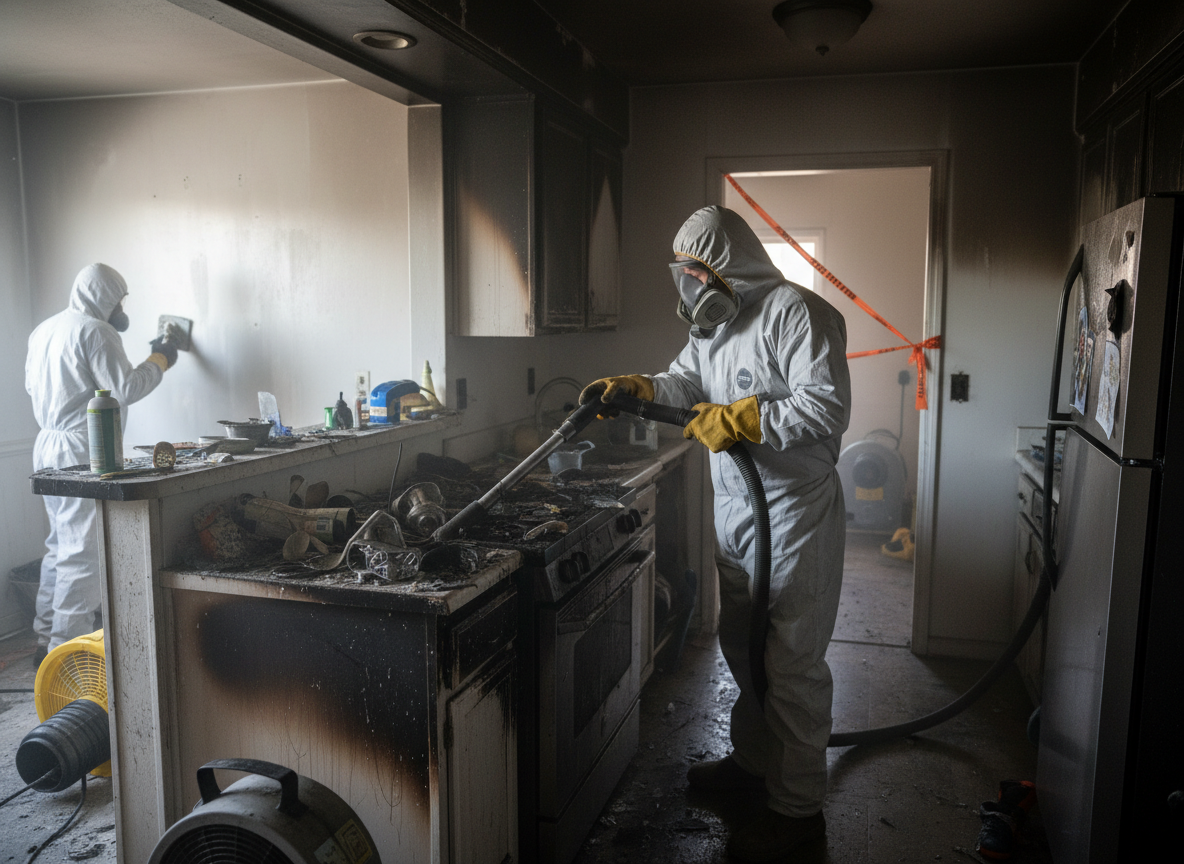
Northridge homes built in the 1950s through 1970s along Reseda Boulevard and in Northridge East often feature original cabinetry and drywall that absorb smoke deeply during kitchen fires. Mediterranean summers with hot dry conditions accelerate soot bonding to surfaces, requiring specialized cleaners that avoid damaging older plaster or wood framing common near California State University Northridge. Technicians must account for how grease fires spread through shared walls in denser blocks near the Northridge Fashion Center, where ventilation systems pull particulates into adjacent rooms.
Cleanup crews address edge cases like hidden charring behind appliances in single-story ranch homes typical of Northridge West, where post-1994 earthquake retrofits can complicate access. In nearby Porter Ranch and Granada Hills, hillside properties see faster smoke travel due to terrain, demanding negative air machines to prevent cross-contamination into living spaces. Los Angeles County codes require proper disposal of contaminated materials, and crews inspect HVAC ducts that run through attics vulnerable to ember carryover during hot weather.
Kitchen fire restoration differs from other fire events because alkaline soot from burned plastics and food requires pH-neutral agents to prevent etching on countertops and tile. Crews test for corrosion on copper wiring and appliances common in homes near Chatsworth borders, where older electrical systems increase secondary risks. Work proceeds room by room to isolate odors before sealing surfaces, ensuring no residue remains in porous materials like carpet padding found in many local residences.
Technician insight
In Northridge, the thing that catches most people out with Kitchen fire cleanup is how quickly smoke from a grease fire penetrates the textured ceilings common in 1960s homes near CSUN, especially when summer heat keeps windows closed and HVAC running. Homeowners often try wiping it themselves and just push the alkaline residue deeper into the drywall.
Northridge East Kitchen Fire
A grease fire started on a range in a 1972 ranch home off Reseda Boulevard. We found soot had traveled through the attic into two bedrooms due to the shared ductwork. We contained the area, removed affected insulation, and treated all surfaces with pH-balanced cleaners before restoring the kitchen and adjacent spaces.
How it works
- 1
Initial Assessment
Technicians arrive 24/7 at the property to document damage extent, test air quality, and identify affected zones in kitchens and connected areas.
- 2
Containment and Safety
Set up barriers and negative pressure to stop soot spread, then remove hazards like charred cabinetry while protecting unaffected rooms.
- 3
Soot and Residue Removal
Apply targeted cleaners to walls, ceilings, and appliances, followed by HEPA vacuuming and HVAC cleaning to capture embedded particles.
- 4
Odor Neutralization and Restoration
Use thermal fogging or ozone treatment where needed, then repair or replace damaged surfaces before final inspection.
Pricing
Costs depend on fire size, smoke migration into other rooms, and materials affected; upfront assessments provided before work begins.