2026-10-17 ·
How to Spot Hidden Smoke Residue in Northridge Houses After Nearby Fires
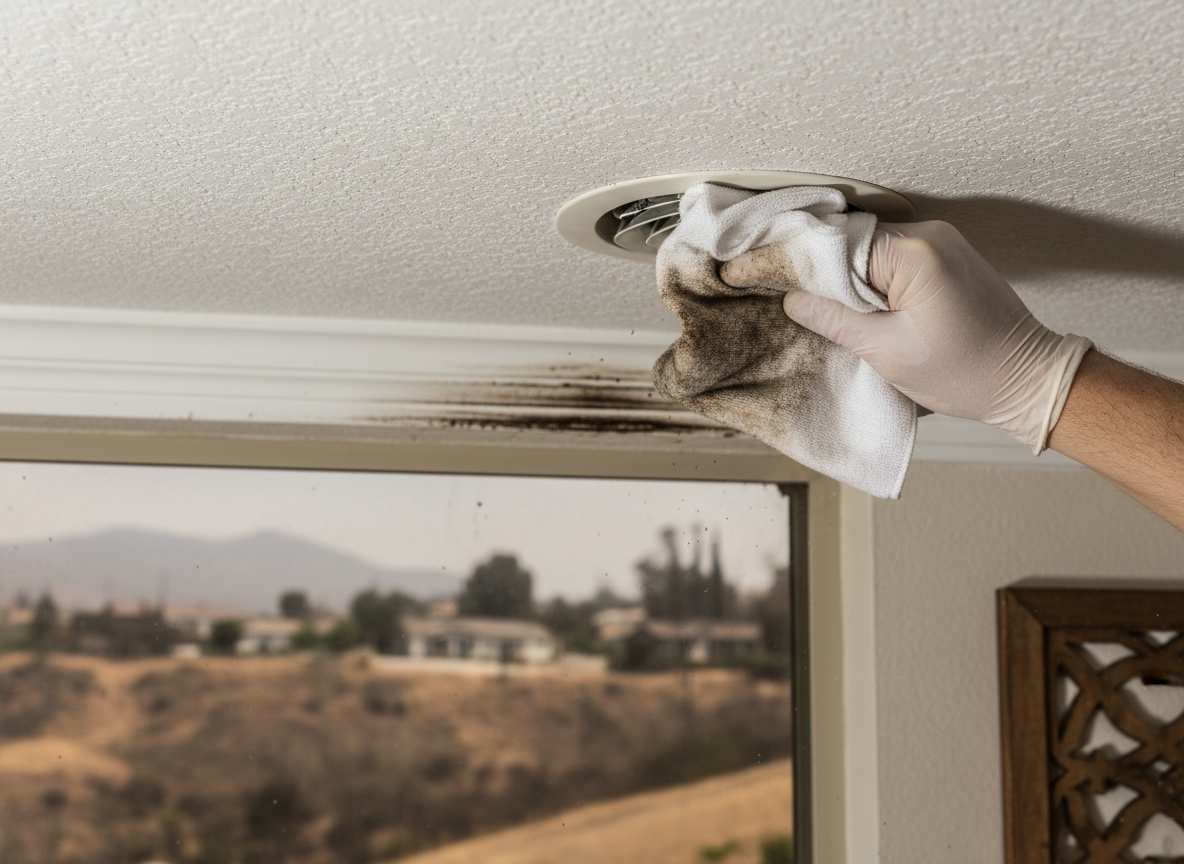
Northridge houses built in the 1950s through 1970s around Northridge East and the CSUN Campus Area commonly hide smoke residue in wall cavities and attic insulation after fires in Porter Ranch or Granada Hills. Start by examining the attic for gray or oily films on rafters and fiberglass batts, as Mediterranean climate heat pulls particles upward through roof vents. Check HVAC returns on the first floor for black streaks on filter slots, since ductwork in these single-story ranches circulates residue for weeks. Run a white cloth along baseboards in Northridge West living rooms to reveal yellow-brown staining that indicates incomplete combustion from nearby blazes.
Inspecting Attics and Insulation in Northridge Homes
Northridge homes near Reseda Boulevard often feature vented attics with blown-in cellulose or fiberglass that readily absorbs smoke from fires originating in Chatsworth or Porter Ranch. Climb into the space during daylight and shine a flashlight across rafters at a low angle to catch the sheen of oily residue that settles on wood and wiring. Pull back insulation edges near the ridge vent to look for discoloration extending 12 to 18 inches inward, a pattern typical when hot summer winds carry particles from Los Angeles County brush fires. Test by wiping a small section with a damp microfiber cloth; if the cloth turns gray or leaves a petroleum odor, residue has penetrated beyond visible surfaces. Older homes in Northridge East frequently have knob-and-tube wiring that creates additional crevices where particles lodge. Document these findings with dated photos before contacting professionals for soot removal to prevent corrosion on electrical connections.
Checking HVAC Systems and Ductwork
Hot summers in Northridge drive residents to run central air more frequently, pulling smoke from fires near the Northridge Fashion Center deep into ductwork of homes built before 1980. Remove the return vent grille in a central hallway and inspect the first 3 feet of flex duct for a sticky film that feels tacky rather than dusty. Run the system on fan-only for 10 minutes, then hold a white paper towel over a supply register to capture any airborne particles that indicate hidden buildup inside the plenum. In Northridge West ranch homes, the evaporator coil housing often collects residue on the condensate pan edges because the unit cycles constantly during heat waves. These deposits release odors when humidity rises, even months later. Homeowners near California State University Northridge should schedule filter changes every 30 days after a nearby fire to avoid redistributing particles through the smoke remediation process.
Testing Walls, Ceilings, and Porous Materials
Drywall in Northridge houses absorbs smoke through paper facing and joint compound, especially in bedrooms adjacent to exterior walls facing Reseda Boulevard. Press a piece of painter's tape firmly against a suspected area, peel it off, and examine the adhesive side under bright light for fine black particles. Test carpet padding in living rooms by lifting a corner near the wall; residue often migrates under baseboards during the initial smoke event. In homes around the CSUN Campus Area, acoustic ceiling tiles from the 1960s trap particles in their porous surface, releasing them when disturbed by foot traffic overhead. Wipe unpainted wood trim with a cotton swab dipped in isopropyl alcohol; persistent discoloration after one pass signals embedded residue that requires professional attention. Readers can review related guidance on what influences fire damage cleanup costs in Northridge before deciding next steps.